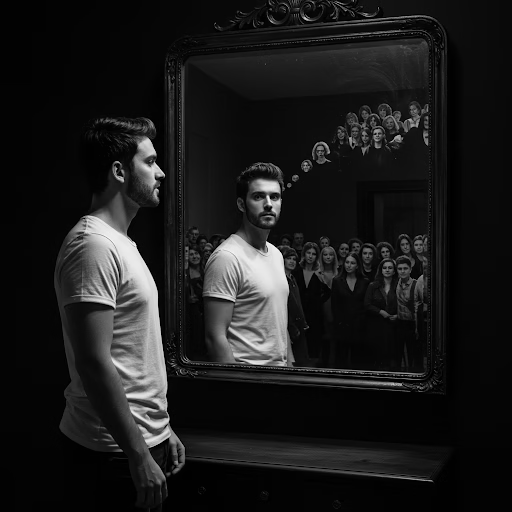
“Why Do We Compare Ourselves to Others?” Comparison is a fundamental part of human nature. From childhood, we observe, measure, and contrast ourselves with those around us. Social comparison helps us understand where we stand, but it also influences our self-perception in complex ways. Whether upward or downward, comparisons shape our confidence, motivation, and emotional well-being.
The Psychology Behind Social Comparison
Psychologist Leon Festinger introduced the Social Comparison Theory, suggesting that people evaluate themselves by comparing their abilities, achievements, and status to others. These comparisons serve as a benchmark for self-assessment but can have both positive and negative effects depending on context and mindset.
Also Read: Evolutionary Roots of Social Comparison
Upward Comparison: Inspiration or Self-Doubt?
Upward comparison occurs when we compare ourselves to those who seem more successful, talented, or attractive. This can be motivating, pushing us to set higher goals and strive for improvement. However, when done excessively or in unrealistic contexts—such as comparing ourselves to celebrities or influencers on social media—it can lead to feelings of inadequacy, envy, and low self-esteem. Instead of motivating us, it may cause frustration and self-doubt.

Downward Comparison: Confidence or Complacency?
On the other hand, downward comparison happens when we compare ourselves to those perceived as less accomplished. This can provide a temporary self-esteem boost, making us feel superior or grateful for our current situation. While this can be beneficial for self-assurance, relying too much on downward comparison can lead to complacency and hinder personal growth.
Also Read: Why Do We Compare Ourselves to Others
Striking a Healthy Balance
The impact of social comparison depends on how often we compare, the context, and our mindset. A growth-oriented mindset allows us to see upward comparisons as inspiration rather than threats. Practicing gratitude and focusing on self-improvement rather than external validation can help maintain a healthy perspective.
Final Thoughts
Comparing ourselves to others is natural, but the key is to use it as a tool for growth rather than self-judgment. Instead of fixating on others’ achievements, shifting focus toward personal progress fosters confidence and fulfillment.