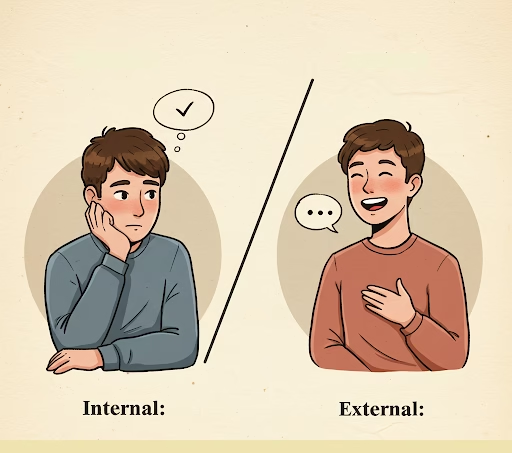
In today’s hyperconnected world, technology keeps us informed, productive, and entertained—but it also contributes to anxiety, stress, and digital burnout. Constant notifications, social media comparisons, and endless work emails can make it hard to disconnect. Practicing mindfulness is a powerful way to regain balance, reduce stress, and build a healthier relationship with technology.
Understanding Tech-Induced Anxiety
Tech-induced anxiety comes from:
- Information Overload – The never-ending stream of news, emails, and messages.
- Social Media Pressure – Comparing our lives to curated, unrealistic online portrayals.
- Always-On Culture – Feeling the need to be constantly available and responsive.
- Screen Fatigue – Excessive screen time leading to mental and physical exhaustion.
Mindfulness helps by bringing awareness to the present moment, allowing us to engage with technology more intentionally instead of reactively.
Also Read: Custom Keyboard Firmware Development
Mindfulness Techniques to Reduce Tech Anxiety
1. The 5-4-3-2-1 Grounding Technique
When feeling overwhelmed by notifications and screens, take a moment to:
- 5 – Notice five things you can see.
- 4 – Identify four things you can touch.
- 3 – Listen for three sounds.
- 2 – Acknowledge two smells.
- 1 – Focus on one thing you can taste.
This simple exercise brings your attention back to the present and helps break the cycle of tech-induced stress.
2. Set Digital Boundaries
- Schedule Tech-Free Time – Designate times in the day where you step away from screens.
- Turn Off Non-Essential Notifications – Reduce distractions and interruptions.
- Use the 20-20-20 Rule – Every 20 minutes, look at something 20 feet away for 20 seconds to reduce eye strain.
3. Practice Intentional Breathing
Deep breathing activates the body’s relaxation response. Try box breathing:
- Inhale for 4 seconds.
- Hold for 4 seconds.
- Exhale for 4 seconds.
- Hold for 4 seconds.
Repeat this cycle a few times to instantly feel more centered and calm.
4. Mindful Scrolling
Instead of mindlessly consuming content, pause before opening an app and ask:
- Why am I opening this?
- How do I feel while using it?
- What am I gaining from this experience?
This practice fosters awareness and prevents getting lost in an endless scroll.
5. Engage in Offline Mindfulness Activities
Balance screen time with activities that promote relaxation and presence:
- Go for a walk without your phone.
- Try meditation or yoga.
- Read a physical book.
- Practice journaling to reflect on your thoughts.
Building a Healthier Relationship with Technology
Technology isn’t the enemy—how we use it matters. Mindfulness helps us become aware of our habits, emotional triggers, and the way technology affects our well-being. By integrating small but impactful mindfulness practices, we can reduce tech-induced anxiety and cultivate a healthier, more intentional digital life.
Take a deep breath, silence your notifications, and reclaim your peace—one mindful moment at a time.