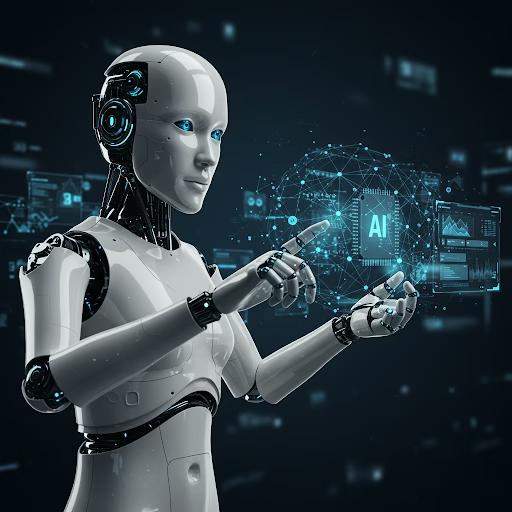
As AI becomes more powerful, decentralized AI agents are emerging as a game-changing solution for automating personal tasks while ensuring privacy and control. Unlike cloud-based AI assistants that store data on centralized servers, decentralized AI agents operate on Web3 networks, giving users more autonomy over their digital workflows. Whether managing schedules, optimizing productivity, or handling financial transactions, these AI-driven assistants offer a secure and private approach to automation.
Why Decentralized AI Agents Matter
Traditional AI assistants like Siri, Alexa, and Google Assistant rely on centralized infrastructure, raising concerns about data privacy and control. In contrast, decentralized AI function on blockchain-based and peer-to-peer (P2P) networks, offering significant advantages:
Enhanced Privacy & Security – User data remains on local devices or encrypted on decentralized networks, reducing the risk of breaches.
No Single Point of Failure – Unlike centralized systems that depend on cloud servers, decentralized AI continues functioning even if part of the network goes offline.
User-Controlled Customization – Instead of relying on tech companies to set AI rules, individuals can train and modify their AI agents according to personal needs.
Interoperability Across Platforms – These AI’s can communicate with smart contracts, DeFi platforms, and IoT devices for seamless automation.
Also Read: AI-Driven Threat Detection for Personal Smart Home Security
How Decentralized AI Agents Work
Decentralized AI agents use a combination of machine learning, smart contracts, and distributed computing to automate tasks securely. Here’s how they function:
1. Local AI Training
- AI models are trained directly on user devices using federated learning, ensuring data never leaves the user’s control.
2. Smart Contract Integration
- AI interact with blockchain smart contracts to execute automated transactions, subscriptions, or services without intermediaries.
3. Decentralized Storage & Computing
- Networks like IPFS and Filecoin store encrypted AI data, preventing unauthorized access.
- Edge computing enables AI to process tasks locally rather than relying on cloud servers.
4. Autonomous Decision-Making
- AI agents use multi-agent reinforcement learning (MARL) to collaborate with other AI models on decentralized networks.
- This allows them to optimize tasks like booking flights, trading crypto, or managing energy-efficient smart homes.
The Future of AI Task Automation
As Web3 and AI technologies continue to merge, decentralized AI agents will redefine personal automation. From managing decentralized finance (DeFi) portfolios to optimizing remote work productivity, these agents will offer customized, private, and highly efficient solutions.
For more insights on AI and Web3 advancements, check out this guide on decentralized AI systems.