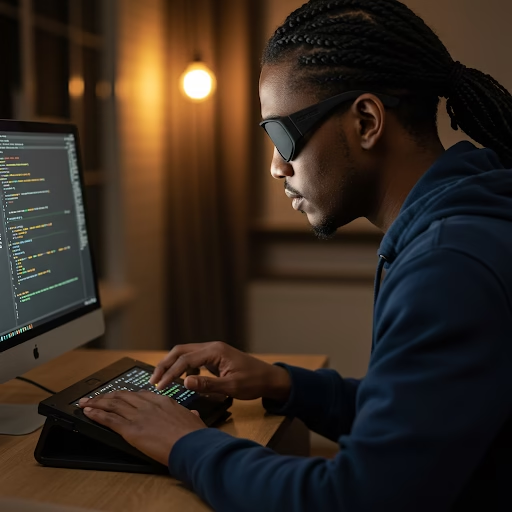
Coding is an essential skill in today’s digital world, and accessibility should never be a barrier. For blind and visually impaired developers, tactile coding tools and assistive technologies provide a powerful way to engage with programming. By leveraging braille displays, audio-based programming environments, and tactile interfaces, blind coders can write, debug, and run code effectively. Here’s how tactile coding works and how it’s transforming accessibility in tech.
1. Braille Displays for Code Reading and Navigation
Braille displays allow blind developers to read and write code line by line. These devices:
- Convert text-based code into braille output.
- Enable navigation through lines, blocks, and syntax elements.
- Work seamlessly with screen readers and coding editors.
Popular braille display tools include the Focus Braille Display and Orbit Reader—both offering real-time text translation to braille.
2. Tactile Coding Editors for Hands-On Development
Some coding environments are built specifically for blind programmers, offering:
- Voice-guided coding interfaces that read out syntax and structure.
- Haptic feedback for syntax errors to improve debugging efficiency.
- Customizable braille integration with programming languages like Python, Java, and HTML.
Accessible editors like Emacspeak and BRLTTY allow for smooth, non-visual navigation and editing of code.
3. Audio-Based Programming for Non-Visual Coding
For developers who prefer auditory learning, screen readers and audio coding platforms help:
- Convert code into spoken text with indentation cues.
- Announce variable names, functions, and errors in real-time.
- Enable voice-controlled coding for a hands-free experience.
Tools like NVDA (NonVisual Desktop Access) and VoiceCode make it easier for blind coders to interact with programming environments efficiently.
Also Read: Building A Personal Brand System For Solopreneurs
4. Haptic Feedback and 3D-Printed Code Blocks
Innovations in tactile technology have introduced:
- Haptic gloves and keypads that provide vibrations for syntax recognition.
- 3D-printed code blocks for physical programming logic assembly.
- Braille-embossed circuit boards for hardware development.
These tools enable a more immersive and hands-on coding experience, particularly for learning and teaching programming concepts.
The Future of Inclusive Coding
Tactile coding tools empower blind developers by making programming more accessible and interactive. As technology advances, the development of better haptic feedback devices, AI-powered screen readers, and multi-sensory coding interfaces will continue to break barriers. By fostering inclusivity in coding, we ensure that talent and innovation remain limitless—regardless of visual ability.