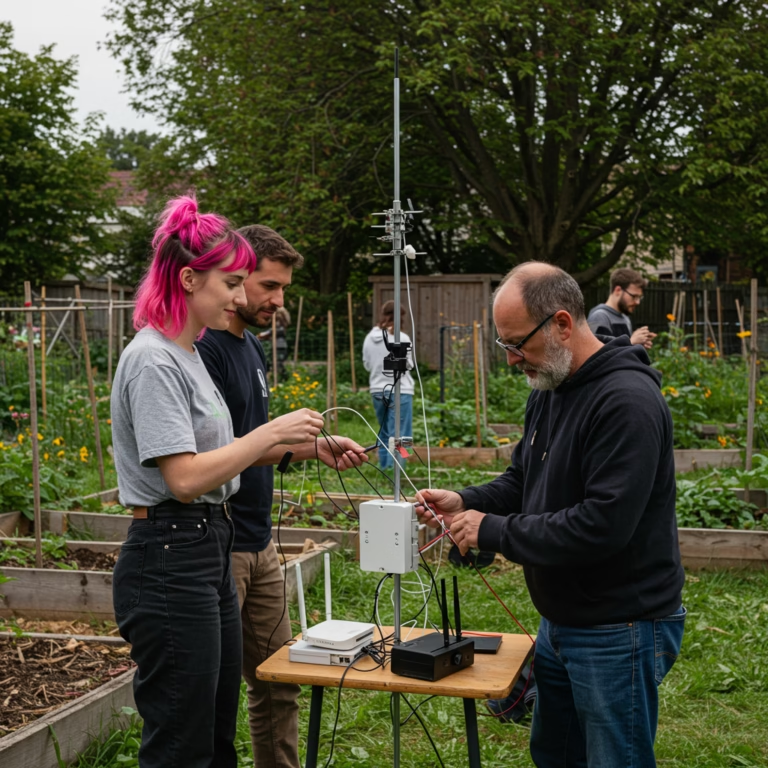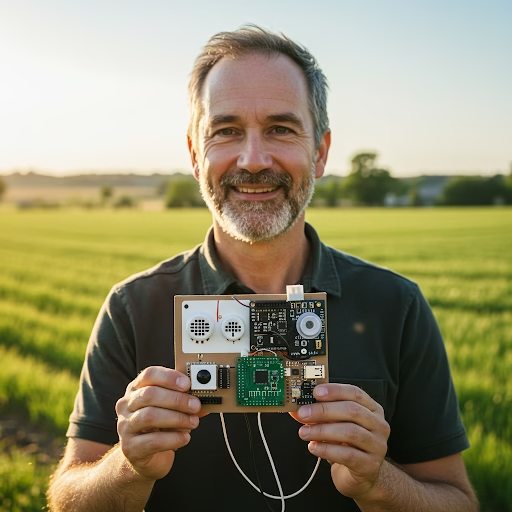
From tracking air pollution to monitoring water quality, open-source hardware is empowering communities to collect environmental data like never before. With affordable sensors and DIY solutions, anyone can become a citizen scientist—helping to gather, analyze, and share crucial environmental information.
Why Open-Source Hardware?
Unlike proprietary systems, open-source hardware is accessible, customizable, and cost-effective. Researchers, activists, and hobbyists can build and deploy their own monitoring tools, ensuring transparency and wider participation in environmental efforts.
Popular Open-Source Hardware for Environmental Monitoring
- Arduino – A versatile microcontroller for building DIY sensors.
- Raspberry Pi – A powerful mini-computer for real-time environmental data processing.
- Air Quality Egg – A community-driven project that tracks air pollution levels.
- OpenCTD – A low-cost, open-source tool for monitoring ocean temperature and conductivity.
- EnviroDIY Mayfly – A data logger for water quality monitoring, widely used in conservation projects.
How to Get Started
- Choose a Focus Area – Are you monitoring air, water, soil, or climate? Select the right sensors for your project.
- Build & Deploy Sensors – Use Arduino or Raspberry Pi to assemble your hardware and set up real-time data collection.
- Analyze & Share Data – Platforms like Sensor.Community allow users to contribute data to global networks.
- Engage the Community – Collaborate with local environmental groups and researchers to maximize impact.
Conclusion
With open-source hardware, environmental monitoring is no longer limited to large institutions. Anyone can build sensors, track environmental changes, and contribute to a global effort for a healthier planet.